Village Patpara, Kanha
A House at the Edge of the Sal Forest
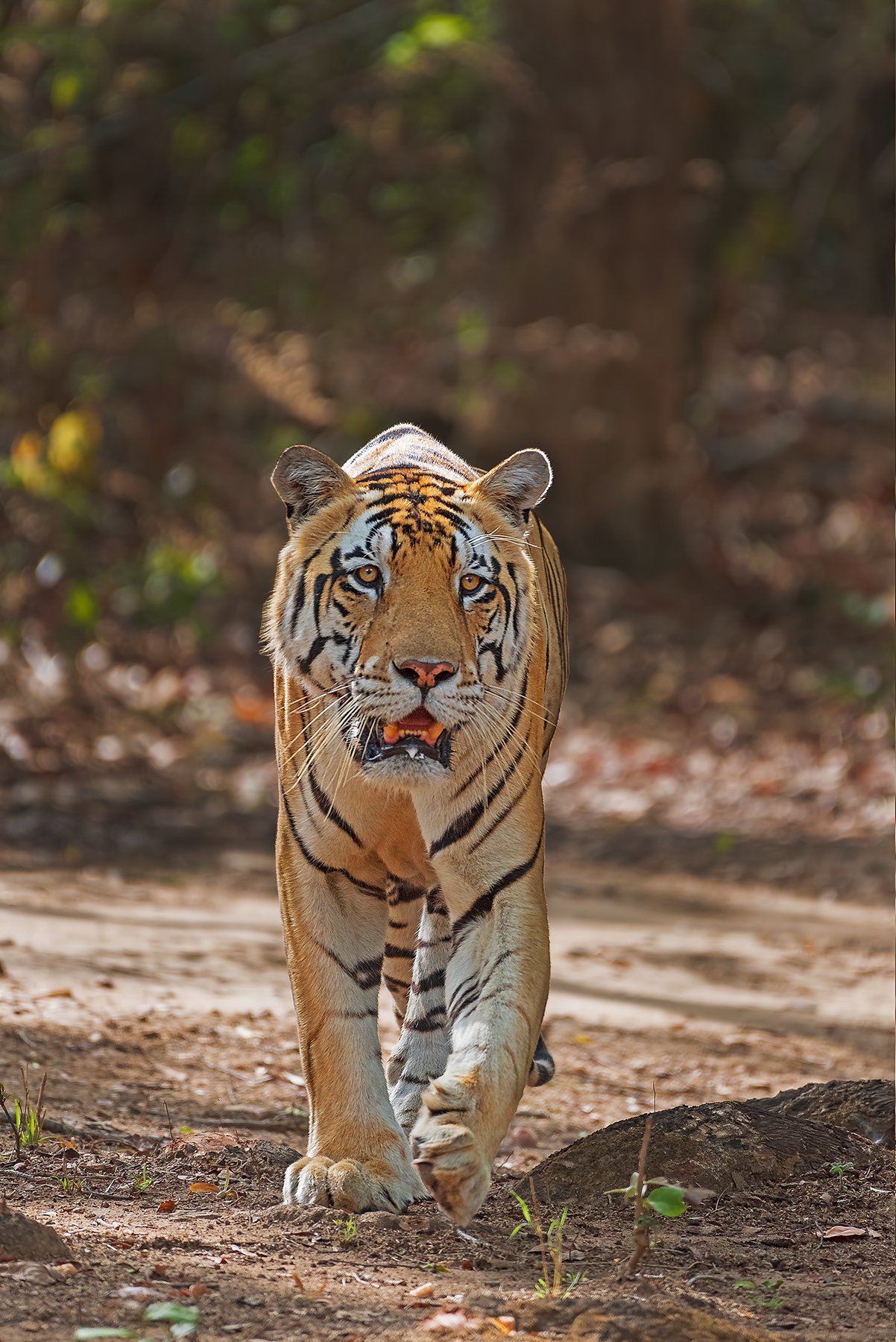
We are the nearest property to Khatia Gate. The highest chance of sighting a tiger is in Khatia Gate because of the dense forest. We can provide Safari at any time, which is the most challenging job in any national park. We have more than 20+ experienced naturalists in-house. Homely feel in deep dense forest.
Courtyard House offers a unique intimate experience. The accommodation is limited for unblemished personal service and privacy.

One Building, Around One Open Square
Most lodges at Kanha are laid out as a scatter of cottages across a compound. Courtyard House is the opposite idea.That square is the point. It is stone-floored and half-shaded, and it does what courtyards have always done in Indian houses — it moves air, it holds cool, and it pulls people out of their rooms. At six in the morning it is where the flasks go. At two in the afternoon nobody speaks much. At nine at night it is where the day's sightings get argued over.The architecture carries a clear line back to British-Indian building of the Raj period — high ceilings, deep verandahs, tall shuttered windows, thick walls that hold last night's cool until noon. It was not a stylistic pose. In this landscape it simply works, which is why it was built that way in the first place.
Why us ?
Twelve rooms means one kitchen serving one sitting. It means every guest gets a naturalist rather than sharing one across a vehicle full of strangers. It means the pool is never full and the courtyard is never loud. It means when you come back from a hard, cold, blank morning having seen nothing but a langur, someone notices, and there is hot food, and you are not standing in a queue for it.Small properties in wildlife destinations are not a luxury affectation. Low density is the product.

Neelesh & Kirty
Owner-Run, Through the Season
Neelesh and Kirty have been at Kanha long enough to remember when it was a place you went to rather than a place you booked. They are not absentee owners with a manager on rotation. They live the season here, and it shows in the things guests notice second rather than first — that the driver knows which meadow the barasingha herd has been using this week, that the kitchen already knows you skipped lunch, that the naturalist assigned on day one is the same one on day three.
The single largest variable in whether a Kanha trip is memorable or disappointing is not the room. It is the person in the front seat of the jeep.A good naturalist at Kanha is doing something specific and difficult. Reading chital and langur alarm calls, judging distance and direction from them. Reading pugmarks for age, direction and gait. Watching wind, water and territory, and holding a mental map of which tiger has been using which stretch of which nallah this week. What they are not doing is driving at speed toward a radio report from another vehicle — which is what a weak guide does, and why weak guides find fewer tigers.
More than twenty naturalists work with the house. Most are from the villages in and around the buffer, walking these forests long before they ever guided in them. That local knowledge is not romantic. It is the operational advantage.Because there are twenty-plus guides, guests do not share a naturalist and do not get a different one every drive. You get one person for the length of your stay — so by drive three they have calibrated to what you actually want, whether that is a photographer's patient wait at a waterhole, a birder's slow crawl along a forest edge, or a family's need to see something in the first two hours.
Conservation at Kanha does not succeed or fail on what happens inside the park boundary. It succeeds or fails in the buffer villages, where people live alongside a protected forest that constrains grazing, firewood and land use — and where the argument that wildlife is worth more alive than dead has to be demonstrated rather than asserted.

Local employment
Almost the entire team — naturalists, kitchen, housekeeping, grounds, drivers — comes from Patpara and neighbouring villages. For a 12 room property, that is a meaningful number of households drawing income directly from the fact that tigers exist nearby.
Craft and produce
Baiga and Gond craftwork bought at fair prices rather than commission rates. Produce sourced from the local market wherever the season allows, rather than trucked from Jabalpur.
Village visits, done properly
Arranged with prior consent, at times the community chooses, and compensated. Guests are asked not to photograph people without permission, and not to give money or sweets to children.
Low impact
One building rather than a sprawl of cottages, which keeps the built footprint small. Single-use plastic minimised, water managed carefully through the dry months, waste segregated.